Enhancing User Interaction with Likes and Dislikes Colored Icons
In today’s digital landscape, user interaction is a critical component of any successful platform. Whether it's a mobile app, website, or social media content, the ability to quickly and effectively gather user feedback can significantly impact engagement and overall performance. One powerful tool that has gained traction in recent years is the Likes and Dislikes Colored Icons. These icons are not just visual elements; they are essential tools for enhancing user experience and driving meaningful interactions.
The Likes and Dislikes Colored Icons are designed to be intuitive and visually appealing. They offer a simple yet effective way for users to express their opinions, making it easier for creators and businesses to understand what resonates with their audience. This design approach aligns with broader trends in user interface (UI) and user experience (UX) design, where simplicity and clarity are paramount.
Understanding the Concept of Likes and Dislikes Colored Icons
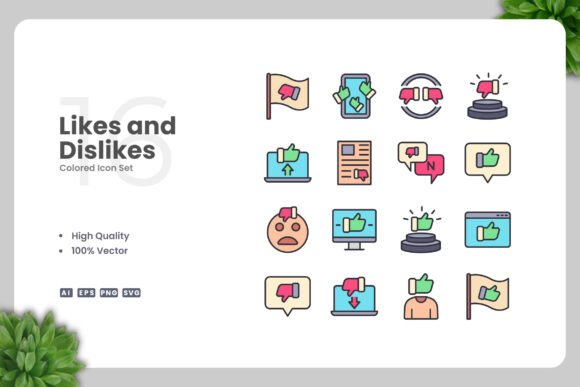
The Likes and Dislikes Colored Icons are a set of vector graphics that represent positive and negative feedback. Each icon is crafted with attention to detail, ensuring that they are both aesthetically pleasing and functionally effective. The use of color in these icons plays a crucial role in conveying the intended message. For instance, a bright red "dislike" icon might signal a strong negative reaction, while a vibrant green "like" icon could indicate approval or satisfaction.
These icons are part of a larger movement towards more interactive and engaging digital experiences. As consumers become more accustomed to quick, visual feedback mechanisms, the demand for such tools continues to grow. The Likes and Dislikes Colored Icons cater to this need by providing a standardized yet customizable solution that can be adapted to various platforms and contexts.
Integration into Broader Industry Trends
The rise of the Likes and Dislikes Colored Icons is closely tied to several industry trends. In the realm of technology, there is a growing emphasis on user-centric design. Companies are increasingly recognizing that the success of their products hinges on how well they meet user needs and expectations. By incorporating these icons, developers and designers can create more responsive and interactive interfaces that foster a deeper connection between users and the platform.
Moreover, in the marketing and business sectors, the ability to gather real-time feedback is invaluable. Marketers can use the Likes and Dislikes Colored Icons to gauge audience reactions to content, advertisements, and product features. This data can then be used to refine strategies, improve customer satisfaction, and drive better outcomes. The icons serve as a bridge between user behavior and business intelligence, enabling more informed decision-making.
Why People Are Paying Attention to Likes and Dislikes Colored Icons
The Likes and Dislikes Colored Icons have captured the attention of professionals, creators, and entrepreneurs for several reasons. Firstly, they offer a visually striking way to convey feedback. In an age where first impressions matter, the right icon can make a significant difference in user engagement. The bold colors and clear design of these icons ensure that they stand out, making it easy for users to interact with them.
Additionally, the Likes and Dislikes Colored Icons are highly customizable. This flexibility allows users to tailor the icons to fit their brand identity or specific project requirements. Whether it's adjusting the color scheme, size, or style, these icons can be easily modified using vector software like Adobe Illustrator or CorelDRAW. This level of customization makes them suitable for a wide range of applications, from websites and mobile apps to print materials and social media content.
Changing Needs and Preferences in the Digital Landscape
The digital landscape is constantly evolving, and so are user needs and preferences. As more people rely on digital platforms for communication, entertainment, and commerce, the demand for intuitive and efficient interaction tools has increased. The Likes and Dislikes Colored Icons address this need by offering a streamlined way for users to provide feedback without the hassle of lengthy forms or complex navigation.
This shift in user behavior is also reflected in the way businesses operate. With the rise of remote work and online collaboration, the importance of clear and immediate feedback has never been higher. The Likes and Dislikes Colored Icons enable teams to quickly assess the effectiveness of their work, identify areas for improvement, and make data-driven decisions. This efficiency is particularly valuable in fast-paced environments where time is a critical resource.
Practical Examples and Observations
Consider a social media platform that integrates Likes and Dislikes Colored Icons into its content-sharing features. Users can instantly express their opinion on a post, which not only enhances engagement but also provides the platform with valuable insights into user preferences. This data can be used to personalize content recommendations, improve user experience, and increase overall satisfaction.
Another example is a mobile app that uses these icons to collect user feedback on new features. By allowing users to quickly like or dislike a feature, developers can prioritize improvements based on real-time data. This approach not only speeds up the development process but also ensures that the final product aligns with user expectations.
Connecting to Larger Developments
The Likes and Dislikes Colored Icons are part of a broader trend towards more interactive and dynamic digital experiences. As technology continues to advance, the line between user and creator is becoming increasingly blurred. Tools that empower users to contribute to the development and refinement of digital products are gaining popularity, and the Likes and Dislikes Colored Icons are a prime example of this shift.
In the context of lifestyle and consumer trends, these icons also reflect a growing desire for instant gratification and immediate feedback. Consumers are no longer satisfied with passive interactions; they want to be actively involved in shaping their experiences. The Likes and Dislikes Colored Icons fulfill this desire by providing a simple, visual way for users to voice their opinions and influence the digital landscape around them.
As we move forward, the relevance of the Likes and Dislikes Colored Icons is likely to grow. Their ability to enhance user interaction, provide valuable insights, and adapt to changing needs makes them an indispensable tool for professionals across various industries. Whether you're a designer, marketer, entrepreneur, or developer, incorporating these icons into your projects can help you stay ahead of the curve and deliver exceptional user experiences.
In conclusion, the Likes and Dislikes Colored Icons represent a significant advancement in the way we interact with digital content. Their clean design, high-quality vector files, and ease of customization make them a versatile solution for a wide range of applications. By leveraging these icons, professionals can create more engaging and responsive platforms that meet the evolving needs of their audiences. As the digital world continues to evolve, the Likes and Dislikes Colored Icons will undoubtedly play a vital role in shaping the future of user interaction.